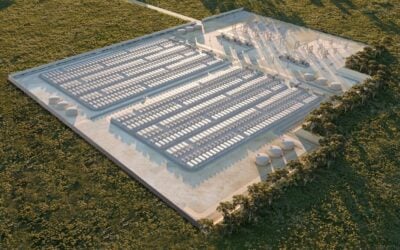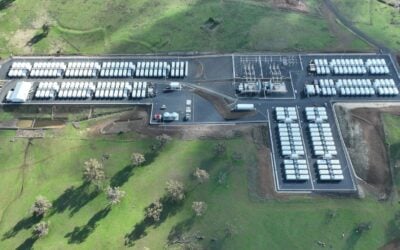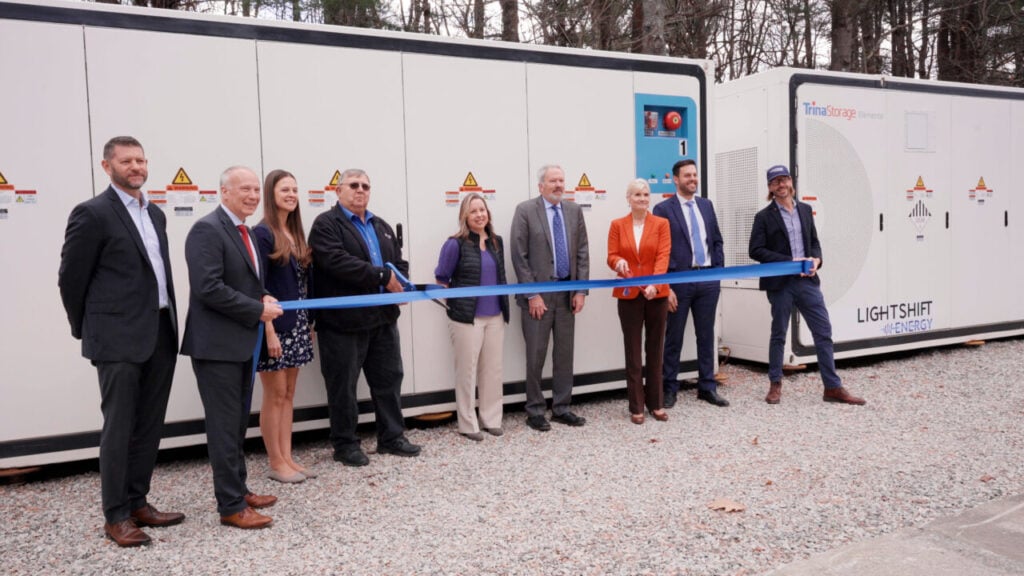
US storage and solar developer-operator Lightshift Energy will build Vermont’s largest battery energy storage system (BESS) project to date.
The 16MW/52MWh BESS is set to begin construction this year and scheduled to come online in early 2026.
Lightshift’s project will be built at the manufacturing facility of semiconductor manufacturer GlobalFoundries (GF) in Essex Junction, Vermont. It will connect directly to GF’s switchyard.
Lightshift says the BESS will primarily be used for peak shaving by storing electricity when demand is low and discharging it at peak times.
Try Premium for just $1
- Full premium access for the first month at only $1
- Converts to an annual rate after 30 days unless cancelled
- Cancel anytime during the trial period
Premium Benefits
- Expert industry analysis and interviews
- Digital access to PV Tech Power journal
- Exclusive event discounts
Or get the full Premium subscription right away
Or continue reading this article for free
Lightshift, previously known as Delorean Power, secured US$100 million from two distinct sustainable infrastructure investment funds managed by Greenbacker Capital Management, with an allocation of 80/20 in April 2024.
In May 2024, the company announced it would deploy distributed BESS projects totalling 50MW for various utilities via the Massachusetts Municipal Wholesale Electric Company (MMWEC). MMWEC is a a joint action agency representing half of the municipal utilities in Massachusetts. In 2022, MMWEC conducted a competitive solicitation, resulting in Lightshift securing contracts for the Massachusetts projects.
In September 2024, the energy storage arm of vertically integrated solar PV module and tracker manufacturer Trina Solar completed four US projects for Lightshift that were awarded in that solicitation. That portfolio consists of approximately 16MW of 4-hour duration systems located in Groton, Holden, and Paxton, Massachusetts.
According to the US Energy Information Administration (EIA), the majority of Vermont’s electricity comes from hydroelectric power generated in Canada. In 2023, approximately 57% of the state’s electricity came from this source.
Multiple sources cite differing numbers on Vermont’s installed energy storage capacity; the state does not often see utility-scale BESS development, but utility Green Mountain Power has made efforts to expand an at-home battery programme.
In 2023, the utility sought an additional US$30 million on top of its US$250 million energy infrastructure investment, for customer and community energy storage programmes over the final two years of its current multi-year regulation plan (MYRP), specifically in 2025 and 2026.
Michael Herbert, Lightshift Co-Founder and Managing Partner, said of the most recently announced BESS:
“GF has been a great partner on this project, which will not only reduce energy costs for its Vermont campus but also support regional electric reliability and Vermont’s clean energy goals.”
“This project represents new applications for energy storage within the semiconductor industry, demonstrating how managing peak demand can improve efficiency for industrial operations, and how energy storage can be used to mitigate the impacts of large loads on the electric grid,” Herbert continued.