Developer Tilt Renewables has submitted plans for two 300MW 8-hour duration battery energy storage systems (BESS) co-located with a wind plant in South Australia to the national Environment Protection and Biodiversity Conservation (EPBC) Act.
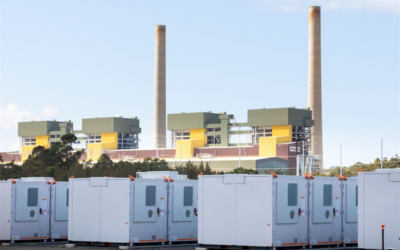
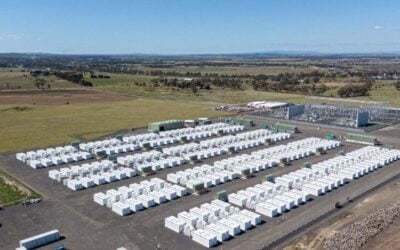
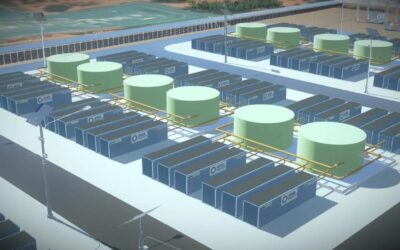
According to planning documents submitted as part of the EPBC application, the two BESS would be located near the proposed Nonowie Wind Farm site’s north and south substations. Individually, these would provide 300MW and storage of up to 8-hour duration, equating to around 4,800MWh of storage capacity.
The Lincoln Highway splits the north and south sites of the project.
Located in South Australia, the 1.2GW Nonowie Wind Farm could become one of the state’s largest wind generation projects and potentially include its first 8-hour duration batteries. It would be situated 10km west of Whyalla, South Australia’s fourth most populous city, on the Eyre Peninsula.
Try Premium for just $1
- Full premium access for the first month at only $1
- Converts to an annual rate after 30 days unless cancelled
- Cancel anytime during the trial period
Premium Benefits
- Expert industry analysis and interviews
- Digital access to PV Tech Power journal
- Exclusive event discounts
Or get the full Premium subscription right away
Or continue reading this article for free
Although ZEN Energy is seeking a development approval (DA) to allow for up to 8 hours of battery energy storage within its 170MW Solar River BESS, the developer intends to proceed in the near term with approximately 2.5 hours of storage capacity, granting Tilt Renewables’ the opportunity to build the state’s first 8-hour BESS.
The Nonowie project would connect to the wider National Electricity Market (NEM) via a direct cut-in to ElectraNet’s Eyre Peninsula Link, or via a new 275kV overhead transmission line to the existing Cultana substation.
The project’s construction phase is expected to take around 36 months, and the site’s commercial life is expected to be 30 years. After this, it would be decommissioned, a process that would likely take 12 to 18 months. Construction would occur in late 2029 and be completed in late 2032.
According to the EPBC application, the project is being proposed in a heavily constrained area. The constraints include electromagnetic interference (EMI) links, existing utilities, hydrology, and protected aviation zones.
South Australia’s energy storage sector
South Australia is often touted as one of the leading regions in the energy transition, owing to its vast renewable energy generation assets, which helped the state reach 100% of its operational demand from renewable resources in 2021.
The state has also been aided by ambitious targets to reach 100% net renewables by 2027. Around 70% of its electricity mix is derived from renewable energy sources, and it is on track to achieve its 2027 target.
However, such is the nature of variable renewable energy (VRE) generation; energy storage capacity needs to be installed for the state to provide a stable grid for its inhabitants, which could prove an economic opportunity for prospective investors.
Due to the rising need for energy storage in South Australia, nearly 2GWh was granted in a Capacity Investment Scheme (CIS) tender round last year. This list of successful projects included Pacific Green Energy’s 250MW/1,000MWh Limestone Coast West BESS, situated in Mingbool, to the southwest of the state capital, Adelaide.
Regular readers of Energy-Storage.news will likley be aware that French independent power producer (IPP) Neoen recently commissioned its 238.5MW/477MWh standalone Blyth BESS in South Australia. It is expected to begin commercial operation in the coming months.