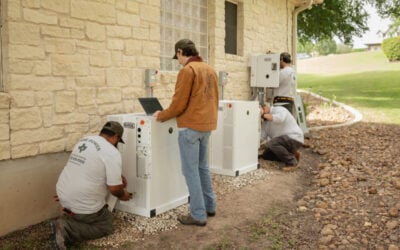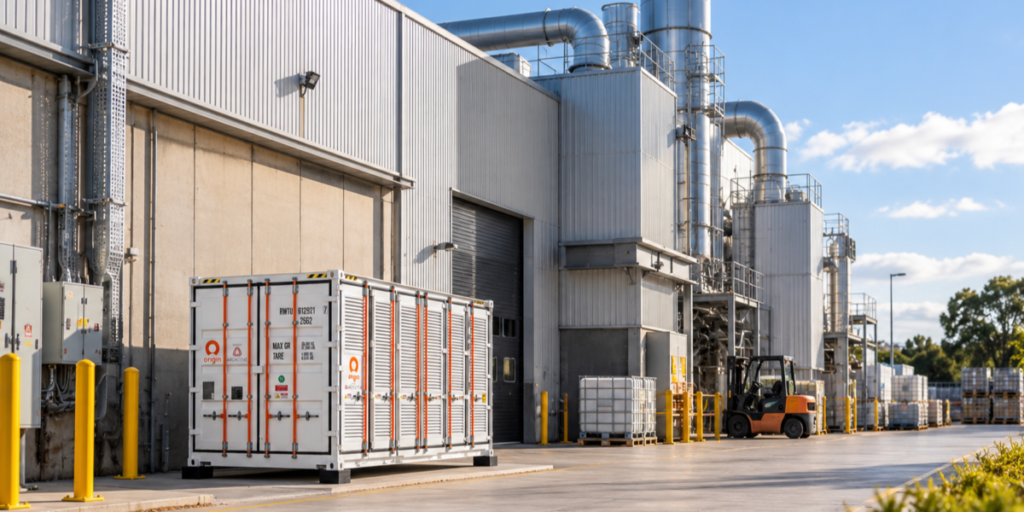
New Zealand energy storage company ArcActive has switched on a pilot lead-acid battery energy storage system (BESS) at Deakin University’s Waurn Ponds campus in Victoria, Australia, with support from Origin Energy.
The pilot operates at Deakin’s new Renewable Grid-Connected Battery Testing Facility in Geelong, within the university’s renewable energy microgrid, which provides electricity generation and storage for campus operations.
Deakin’s microgrid was delivered in partnership with AusNet Services, the Victorian electricity network operator, and its commercial arm, Mondo. It combines a 7MW solar PV plant with 0.25MW of rooftop solar and storage, and supplies about 54% of the campus’s power, according to the university.
ArcActive is targeting commercial and industrial (C&I) businesses that want to store solar electricity for later use and buy less power from the grid when prices are high, but face costs and complexity that can stop projects from proceeding.
Try Premium for just $1
- Full premium access for the first month at only $1
- Converts to an annual rate after 30 days unless cancelled
- Cancel anytime during the trial period
Premium Benefits
- Expert industry analysis and interviews
- Digital access to PV Tech Power journal
- Exclusive event discounts
Or get the full Premium subscription right away
Or continue reading this article for free
Policymakers are also targeting that segment. New South Wales began offering an upfront discount of around 20% to 40% on battery storage for businesses and apartment buildings from 1 September 2026, covering C&I systems from 20kWh to 30,000kWh.
ArcActive’s system builds on lead-acid technology already used for backup power in telecommunications, hospitals and data centres. The company has redesigned the internal structure, using a fabric framework to support the material that stores and releases energy, and said the design aims to extend cycle life while keeping lead-acid’s low cost.
ArcActive CEO Stuart McKenzie said: “The cost of installing a battery goes beyond the battery itself. Businesses also need to account for engineering work, approvals, insurance and safety measures. If they don’t know what their site will need or how much it will cost, they can be reluctant to invest.”
He said lead-acid is “a technology that engineers, approval authorities and insurers already know,” with established pathways for approving and insuring installations alongside businesses and occupied buildings.
“We want businesses to be able to deploy storage through a more standardised, repeatable process, with greater confidence about the cost, the approval requirements and the financial return,” McKenzie added.
Origin, which generates electricity and retails electricity and gas, is supporting the pilot. Bill Truscott, Origin’s group manager for customer solution development and emerging technology, said trials such as this one offered opportunities to learn about emerging technologies and their potential uses for customers.
“We’re interested in how new technologies could help our commercial and industrial customers innovate and manage their energy needs,” Truscott said.
The company also owns utility-scale BESS in Australia. In August 2026, Origin’s 300MW/650MWh Mortlake BESS in south-west Victoria began commercial operations on the site of its existing Mortlake Power Station.
In New South Wales, Origin has referred Eraring BESS North, a 500MW/4,942MWh system beside its existing Eraring BESS, to the federal government under Australia’s Environment Protection and Biodiversity Conservation (EPBC) Act.
How lead-acid battery storage works
A lead-acid battery stores and releases energy through a chemical reaction between lead-based plates and a sulphuric acid electrolyte. The International Lead Association has described it as a 150-year-old technology that is finding new uses in renewable energy storage, including a 20MWh system at a solar PV plant in Tibet.
Its main benefits are low upfront cost, an established recycling industry and a long safety record. The Advanced Lead Acid Battery Consortium cited the low cost, recycling and proven safety of lead batteries when it sought research funding in 2016 to compete with lithium-ion.
Battery Council International, the US lead battery trade group, reported a 99% recycling rate for lead batteries in the US between 2014 and 2018, and said new units contain more than 80% recycled material.
Other developers have redesigned lead-acid to address this. Ecoult, a former subsidiary of CSIRO, Australia’s national science agency, deployed its UltraBattery, which combines lead-acid with an ultracapacitor, at a smart grid testbed in Dublin in 2016.
Never miss an Australian energy storage story. Sign up for our Australia newsletter and get the latest project announcements, policy updates and market analysis delivered directly to you.