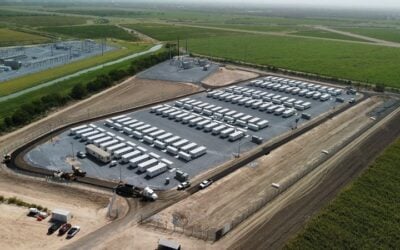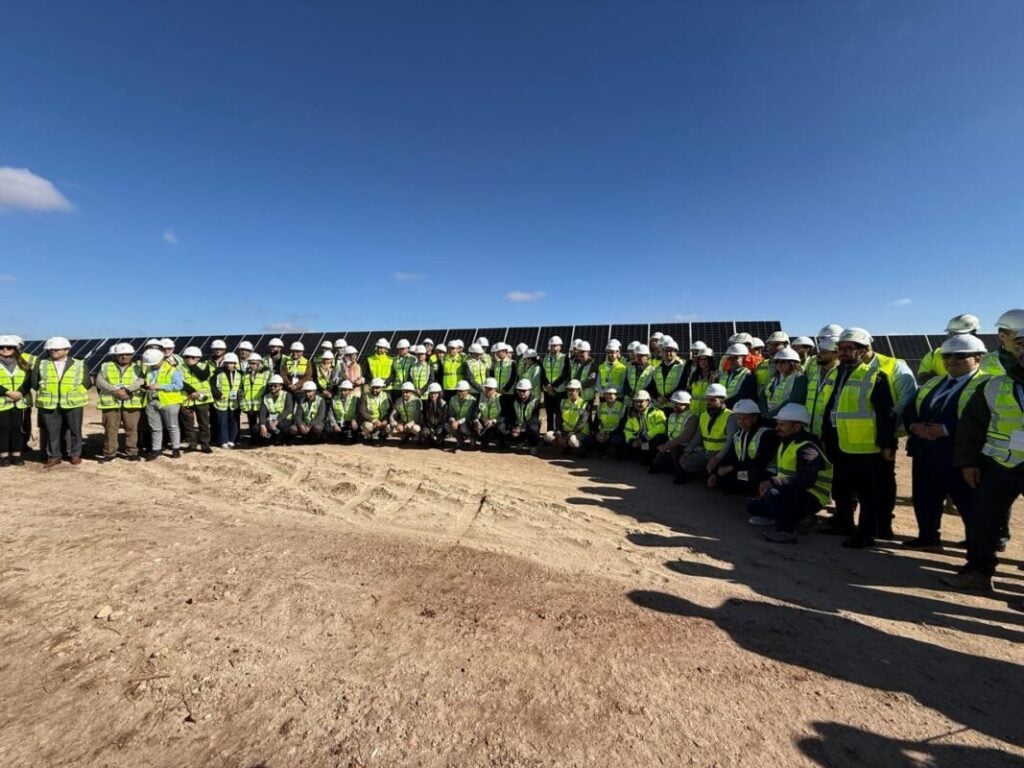
Renewable energy developer OCP Green Energy has completed the installation of a 25MW/125MWh battery energy storage system (BESS) in Benguerir, Morocco.
The 5-hour duration project is the North African country’s first-ever large-scale lithium iron phosphate (LFP) BESS installation. OCP Green Energy announced on 14 September that construction of the system is complete, it has been energised and is now undergoing commissioning.
The project is located at the site of an open-pit phosphate mining complex in central Morocco operated by OCP Green Energy’s parent company, OCP Group, a Moroccan state-owned miner and major producer of phosphate-based fertilisers.
The BESS will help power OCP Group’s industrial and mining operations with increasing shares of renewable energy, charging from abundant solar PV during the day and ensuring continuity of supply.
Try Premium for just $1
- Full premium access for the first month at only $1
- Converts to an annual rate after 30 days unless cancelled
- Cancel anytime during the trial period
Premium Benefits
- Expert industry analysis and interviews
- Digital access to PV Tech Power journal
- Exclusive event discounts
Or get the full Premium subscription right away
Or continue reading this article for free
Battery storage equipment was supplied by the Chinese wind turbine, BESS and energy software company Envision through contracts signed in late 2025. OCP Green Energy said the order was placed during a favourable market window, prior to fresh pressure being placed on global battery storage supply chains.
The project follows OCP Group’s US$13 billion programme to invest in expanding fertiliser production and deploying renewable energy in the 2023-2027 timeframe. That included a pledge to supply all group industrial facilities with green energy by 2027, equivalent to 5GW of generation. By 2032, OCP is targeting at least 13GW of renewable energy.
It made its first renewable energy investments through the programme late last year, bringing online a 202MWp portfolio of three solar PV plants in December 2025, including Oulad Farès, which, at 105MWp, is currently Morocco’s largest PV plant in operation.
At the time, OCP Group said the three solar plants cover a significant share of its mining site’s energy needs. The company estimated the cost of electricity from the plants at MAD368/MWh (US$38.92/MWh), describing its low cost as key to the industrial production of customised fertilisers.
One of those three plants is a 67MWp facility at the Benguerir mine, which will charge the newly completed BESS directly. In addition to behind-the-meter (BTM) applications for ensuring power quality and increasing onsite solar consumption, the system can also participate in ancillary services, including frequency regulation and reactive power compensation.
African Development Bank support for OCP’s green investment
OCP Group said it invested close to MAD170 million (US$17.98 million) in the BESS and associated integration works.
It received an additional US$20 million in support from the African Development Bank’s (ADB’s) Clean Technology Fund (CTF). ADB also provided OCP Group with a credit guarantee for up to €450 million (US$519.77 million) in December to support the fertiliser company’s Green Investment Programme.
In July, the ADB board approved a US$100 million loan to Gotion Power Morocco, a subsidiary of Chinese battery and BESS manufacturer Gotion High-Tech, towards the development of an integrated cathode-to-cell LFP battery gigafactory in the Rabat-Salé-Kénitra Free Trade Zone.
The bank also plans to mobilise up to US$141 million in additional financing from partners for a factory with 10GWh annual production capacity of battery cells and packs for electric vehicles (EVs) in the first phase, expandable to 100GWh annual capacity.