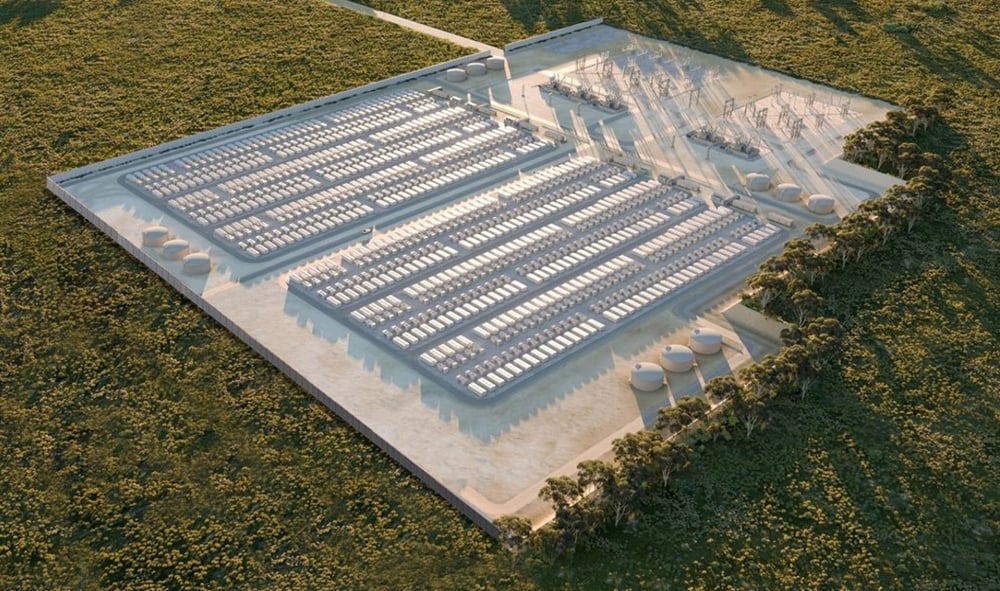
Samsung C&T’s Australian renewables arm has referred an 800MWh battery energy storage system (BESS) in Victoria’s Gippsland region to the federal government under Australia’s Environment Protection and Biodiversity Conservation (EPBC) Act.
The Darnum BESS would have a power output of 200MW and be built at Shady Creek, about 7km north of Darnum and 8km north-east of Warragul in the Baw Baw Shire local government area.
Darnum BESS Pty Ltd is the trustee of the Darnum BESS Trust, which is operated by Samsung C&T Renewable Energy Australia (SREA).
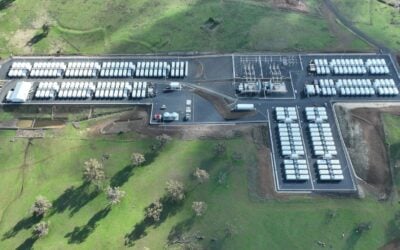
The project sits on a 52.25-hectare area of freehold farmland, although only about 7 hectares would be used for the operating site. That includes roughly 2.5 hectares for the BESS compound, which would hold 196 storage modules and 49 step-up transformers, and 3 hectares for a 33/220kV substation, switchyard and grid connection.
Try Premium for just $1
- Full premium access for the first month at only $1
- Converts to an annual rate after 30 days unless cancelled
- Cancel anytime during the trial period
Premium Benefits
- Expert industry analysis and interviews
- Digital access to PV Tech Power journal
- Exclusive event discounts
Or get the full Premium subscription right away
Or continue reading this article for free
The project would connect to the National Electricity Market (NEM), Australia’s main grid across its eastern and southern states, through the existing 220kV line between Yallourn Power Station and Rowville Terminal Station that crosses the site.
The referral places the project among the transmission lines linking the proposed Gippsland and Gippsland Shoreline Renewable Energy Zones (REZs) to Melbourne, and to the Gippsland declared offshore wind area.
It cites VicGrid, the Victorian transmission planner, whose 2025 Victorian Transmission Plan models the Gippsland zone and the offshore wind area contributing up to 1.1GW and 9GW respectively.
Together, the referral said, that would be between 43.5% and 75% of Victoria’s renewable energy generation by 2040, depending on the scenario.
It argued that storage and system strength services would help use the existing network without the need for major new transmission lines.
It also pointed to Victoria’s legislated target of at least 6.3GW of storage output by 2035.
Construction is expected to begin in 2027 and take up to 18 months, with a peak workforce of about 80 full-time equivalent staff, largely drawn from the Gippsland region. The BESS would operate for 25 years, after which its components could be replaced or refurbished, or the site decommissioned.
The referral said about 0.671 hectares of native vegetation would be removed, mostly scattered trees and small patches along the site access.
It said no nationally or state-listed threatened species or ecological communities would be removed.
Green Scentbark, a tree listed as endangered under Victorian law, was recorded in the eastern part of the site, and the design avoids it.
A cultural heritage artefact found during testing has been registered as a new Aboriginal place, and a voluntary management plan prepared with the Gunaikurnai Land and Waters Aboriginal Corporation includes a protection zone around it.
A planning permit application was lodged on 2 July with the Victorian Department of Transport and Planning through its Development Facilitation Program, with the Minister for Planning as the responsible authority.
Samsung C&T adds Victoria to its Australian pipeline
SREA was set up in 2022 as the Australian renewables unit of Samsung C&T, the construction and trading business of the South Korean conglomerate.
In February, it completed the sale of the Dunmore project, a 300MW solar PV power plant paired with a 150MW/300MWh BESS west of Brisbane in Queensland, to Octopus Australia, the Australian arm of UK-based Octopus Group.
When it referred the 150MW/600MWh Comet Park BESS near Leeton in New South Wales, SREA’s pipeline was reported as five solar PV power plants totalling 1.28GW, each with a BESS, and six standalone BESS totalling 2.82GW across New South Wales and Queensland.
The referral lists seven earlier SREA referrals. Boro Solar Farm in New South Wales was ruled a controlled action, meaning it needs assessment and approval, while Comet Park, Mangoplah and The Block BESS were ruled not to be.
Darnum follows several other large BESS referrals in recent weeks. Lightsource bp, the Australian arm of the British-headquartered solar and BESS developer, referred its Narrogin East project in Western Australia’s Wheatbelt.
It combines about 250MW of wind, 150MW of solar PV and a 200MW/800MWh BESS, and the company does not consider it a controlled action.
EDF Power Solutions Australia, an indirect subsidiary of French state-owned utility EDF, referred an 800MWh BESS alongside up to 60 wind turbines at its Balala Wind Farm in the New England renewable energy zone of New South Wales, with construction expected from 2030.
Origin Energy, the energy retailer and generator, referred Eraring BESS North, a 500MW/4,942MWh system beside its existing Eraring BESS in New South Wales, citing the planned closure of the Eraring coal plant.
Never miss an Australian energy storage story. Sign up for our Australia newsletter and get the latest project announcements, policy updates and market analysis delivered directly to you.